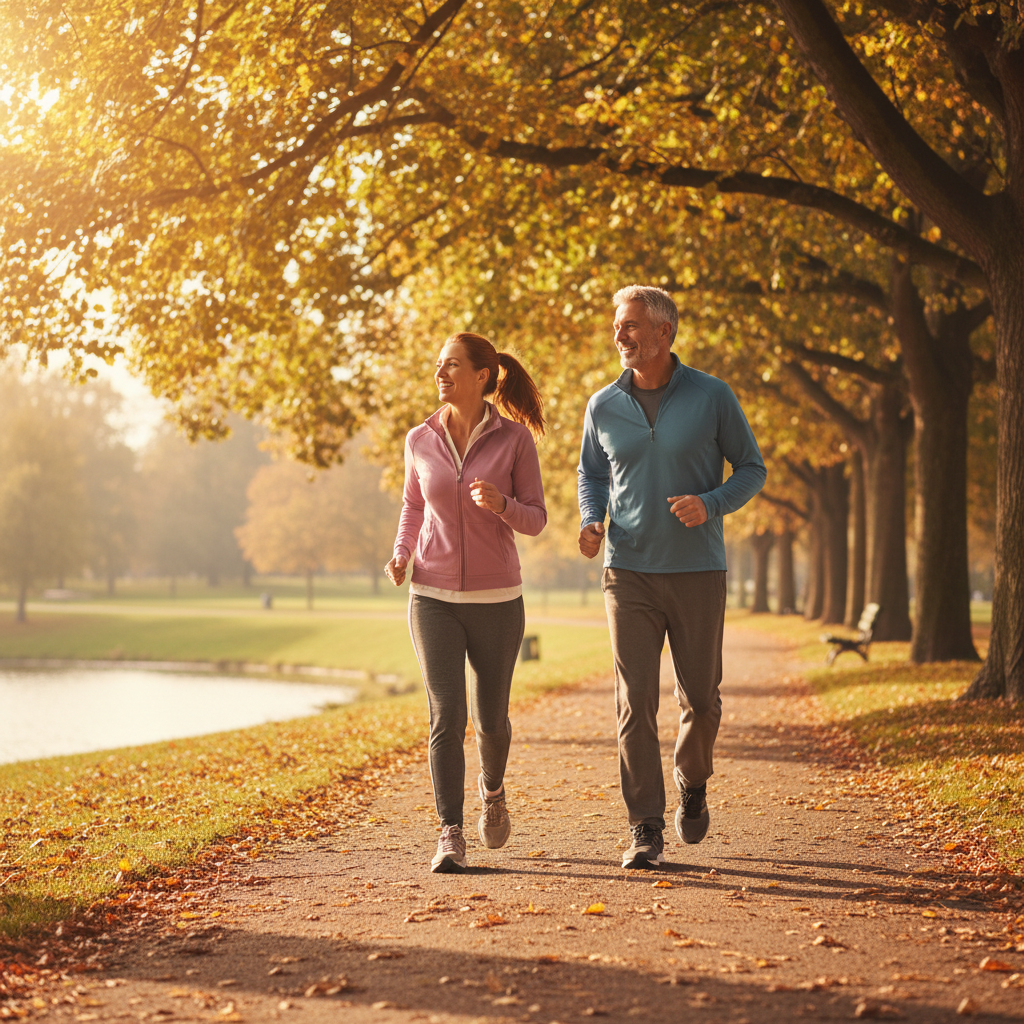
Walking is the most accessible, most underestimated, and most effective exercise for patients on GLP-1 agonists. Without equipment or subscription, it improves cardiovascular health, bowel transit, and mental well-being during treatment.
Walking: the ideal exercise during GLP-1 treatment
Brisk walking is recommended by the WHO as a basic physical activity for all adults. For those on GLP-1 agonists, it offers specific benefits: it is well-tolerated even on days with nausea, does not cause injuries, improves intestinal motility (reducing tirzepatide-related constipation), and can be practiced daily without requiring recovery.
A study published in JAMA Internal Medicine (2023) involving 60,000 adults shows that 8,000 to 10,000 steps per day reduce all-cause mortality by 50% and cardiovascular risk by 40%. For patients on GLP-1, these benefits add to those of the medication.
How many steps per day: realistic goals
The goal of 10,000 steps/day is a marketing benchmark created in 1965 by a Japanese pedometer manufacturer, not a medical recommendation. Recent scientific data shows that maximum benefits are achieved at 7,000-8,000 steps/day, with a plateau beyond 10,000 steps.
- Sedentary beginner: start with your current step count + 1000 steps/day each week. If you take 3000 steps today, aim for 4000 next week.
- Intermediate goal (weeks 4-8): 6000-7000 steps/day. Equivalent to approximately 45-60 minutes of fragmented walking throughout the day.
- Optimal goal (from week 12): 8000-10000 steps/day. Integrate a 30-minute walk in the morning and a 20-minute walk after dinner.
Walking and digestive health with tirzepatide
Postprandial walking (after meals) is particularly beneficial with tirzepatide. A meta-analysis of 135 studies published in Sports Medicine (2024) demonstrates that 15-20 minutes of walking after a meal reduces postprandial glycemia by 17%, improves gastric emptying, and reduces bloating.
For patients suffering from constipation on GLP-1, walking stimulates intestinal peristalsis. A daily 30-minute walk increases stool frequency by 40% according to a study published in the Scandinavian Journal of Gastroenterology.
Techniques to optimize your walking
- Brisk walking (5-6 km/h): the ideal pace is one where you can talk but not sing. This corresponds to a moderate intensity.
- Nordic walking: poles engage the upper body, increasing caloric expenditure by 20-30% compared to classic walking.
- Interval walking: alternate 3 minutes of brisk walking and 1 minute of slow walking. More effective for cardiovascular health.
- Hill walking: inclines and stairs increase intensity and strengthen leg and gluteal muscles.
Integrating walking into your daily life
Walking doesn’t need to be a dedicated session. Get off a bus or subway stop earlier, park further away, take the stairs, walk during phone calls, take a 15-minute stroll during your lunch break. These micro-walks easily accumulate to reach 8000 daily steps.
Use a pedometer or a smartwatch to track your steps. The MounjaGO app can integrate your activity data for comprehensive progress tracking. Gamification (daily goals, streaks, challenges) increases adherence by 27% according to a study from Stanford University.
Track your progress with the MounjaGO app.
FAQ
How many steps per day with Mounjaro?
Aim progressively for 8000 to 10000 steps per day. Start by adding 1000 steps to your current level each week. Health benefits are significant from 7000 daily steps.
Does walking help with constipation on tirzepatide?
Yes, a daily 30-minute walk stimulates intestinal peristalsis and increases stool frequency by 40%. Postprandial walking is particularly effective in improving bowel transit.
Should I walk even on days with nausea on GLP-1?
Yes, a gentle 10-15 minute walk in fresh air can even reduce nausea. Adapt the intensity to your condition: a slow walk is always preferable to total inactivity.