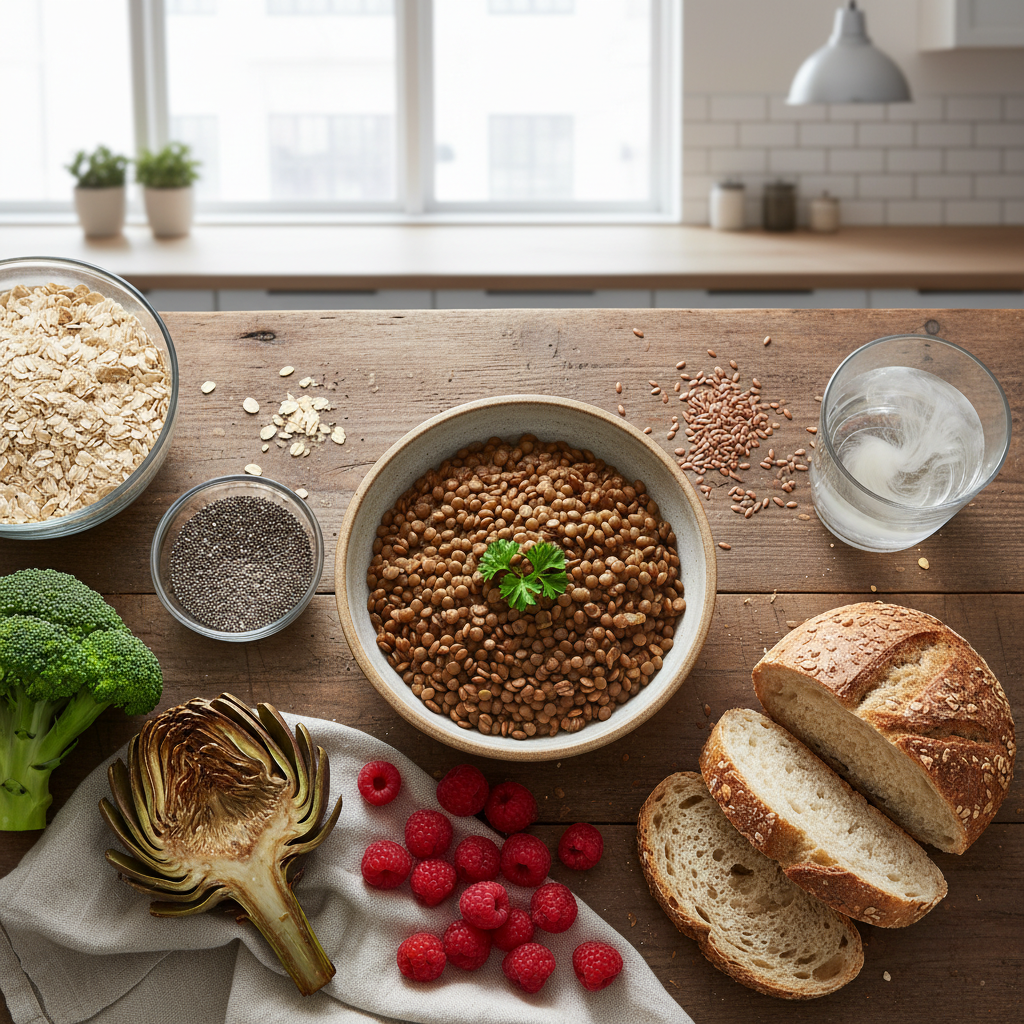
Dietary fibers play a fundamental role in the digestive comfort of patients on GLP-1 agonists. Their synergistic action with tirzepatide improves intestinal transit, reduces bloating, and optimizes the absorption of essential nutrients.
Why Fibers Are Essential with GLP-1 Treatment
Tirzepatide slows gastric emptying, which can cause constipation, bloating, and abdominal discomfort in 15 to 25% of patients according to data from the SURMOUNT-1 study (NEJM, 2022). Dietary fibers act as a natural transit regulator by increasing stool volume and stimulating intestinal peristalsis.
There are two types of fibers with complementary roles. Soluble fibers (pectin, beta-glucan, psyllium) form a viscous gel that slows glucose absorption and nourishes the gut microbiota. Insoluble fibers (cellulose, lignin) accelerate transit and increase fecal volume. The combination of both types is recommended by the French Society of Nutrition.
Recommended Intake and Progressive Goals
ANSES recommends a daily fiber intake of 25 to 30 g for the general population. With GLP-1 treatment, this goal can be difficult to achieve due to reduced appetite. It is therefore crucial to incorporate fiber-dense foods in adapted portions.
A gradual increase is essential to avoid bloating. Experts recommend adding 5 g of fiber per week until the goal is reached, alongside sufficient hydration (at least 1.5 liters of water per day). This gradual approach is particularly important during the first weeks of tirzepatide treatment.
Best Fiber Sources for Patients on Tirzepatide
- Legumes (lentils, chickpeas, beans): 7 to 12 g of fiber per 100 g cooked, excellent sources of plant-based protein
- Whole grains (oats, quinoa, brown rice): 3 to 8 g of fiber per 100 g, rich in beta-glucan
- Fruits (raspberries, pears, apples with skin): 3 to 8 g per serving, provide soluble fiber
- Vegetables (artichoke, broccoli, spinach): 3 to 5 g per 100 g, very well tolerated with GLP-1
- Seeds (chia, flax, psyllium): 5 to 10 g per tablespoon, easy to incorporate into meals
Fibers and Gut Microbiota with GLP-1
Research published in Cell Host & Microbe (2023) shows that GLP-1 agonists modify the composition of the gut microbiota. Fermentable fibers (inulin, FOS, GOS) nourish beneficial bacteria like Akkermansia muciniphila and Bifidobacterium, whose abundance is associated with a better treatment response.
The production of short-chain fatty acids (butyrate, propionate, acetate) through fiber fermentation strengthens the intestinal barrier and reduces systemic inflammation. These mechanisms contribute to optimizing the metabolic effects of tirzepatide, according to a meta-analysis published in Gut Microbes (2024).
Practical Strategies to Increase Daily Fiber Intake
- Start each meal with a portion of raw or cooked vegetables to facilitate digestion
- Gradually replace refined grains with whole grains (whole wheat bread, whole wheat pasta)
- Add a tablespoon of chia or flax seeds to your morning yogurt or smoothie
- Prefer whole fruits over juices to retain fibers
- Incorporate legumes 3 to 4 times a week into your dishes
Precautions and Contraindications
A sudden excess of fiber can worsen gastrointestinal symptoms with tirzepatide. Patients suffering from gastroparesis should adapt their intake of insoluble fibers, which can form gastric bezoars. In case of persistent nausea, prioritize soluble fibers (applesauce, blended vegetable soup) which are better tolerated.
Psyllium supplementation (Metamucil, Ispaghul) represents an effective option to reach the fiber goal without overloading the digestive system. An intake of 5 to 10 g per day, diluted in a large glass of water and taken at a distance from the tirzepatide injection, is generally well tolerated according to SNFGE recommendations.
Track your progress with the MounjaGO app.
FAQ
How much fiber per day with Mounjaro?
The goal is 25 to 30 g of fiber per day, to be reached gradually by increasing by 5 g per week to avoid bloating. Always combine fibers with sufficient hydration of at least 1.5 liters of water.
Do fibers worsen the digestive side effects of tirzepatide?
No, if the increase is gradual. Soluble fibers (psyllium, pectin) generally improve transit. However, avoid excessive insoluble fibers in case of nausea or gastroparesis.
What is the best time to eat fibers with GLP-1?
Distribute fibers across all meals rather than concentrating the intake. Start each meal with vegetables, and take your fiber supplements at a distance from the tirzepatide injection.
Free tool — check your BMI and weight-loss projection.
Related Reading on
- Proteins and GLP-1: Why Protein Intake is Crucial
- Managing Festive Meals and Restaurant Outings on Mounjaro
- Couple and Weight Loss on GLP-1: Managing Relational Dynamics
- Social Pressure and GLP-1: Addressing Questions from Your Inner Circle
- Eating Disorders and GLP-1: Essential Precautions
Further reading : WHO healthy diet fact sheet.
To track the effect on your own curve, logged data beats vague recollections on the day of your appointment: the MounjaGO app brings together weight, doses, side effects and meals, and turns them into a PDF report for your doctor — $12 for lifetime access, no subscription.