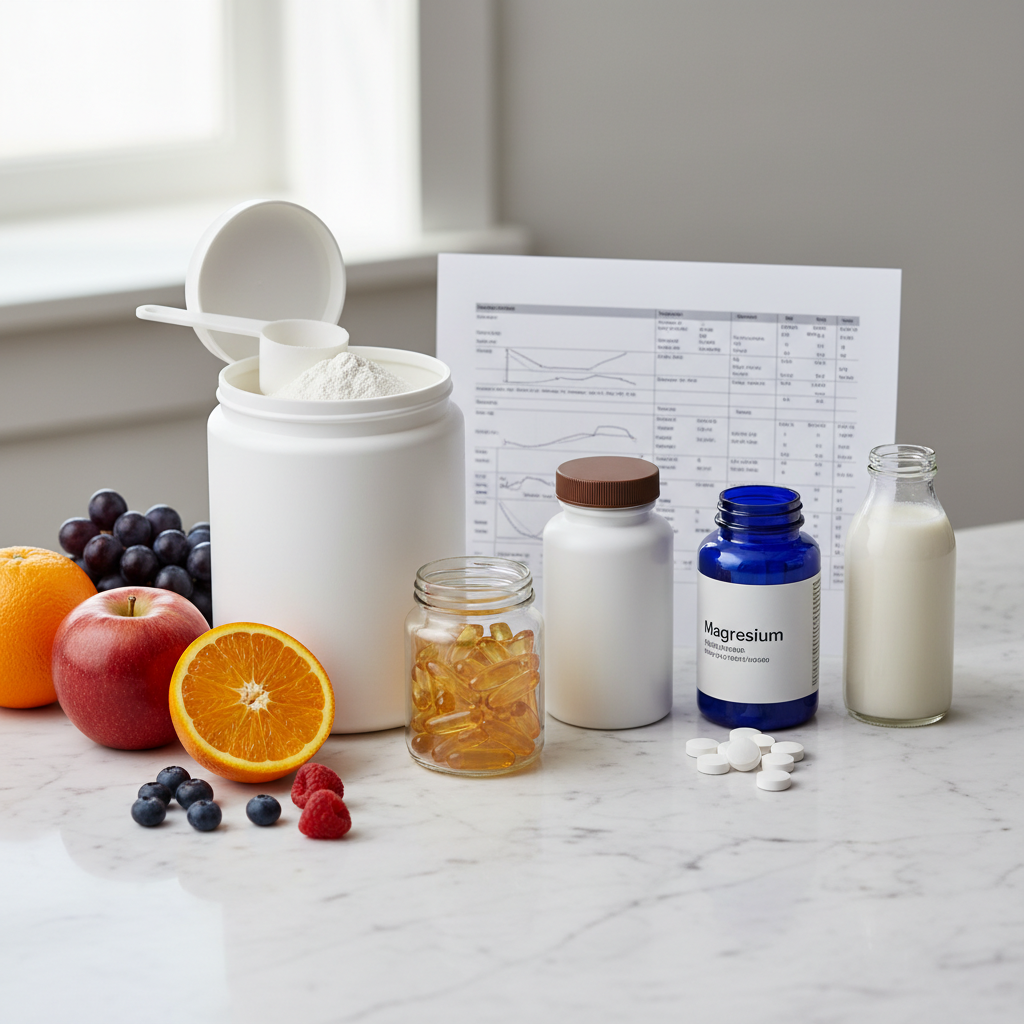
Dietary supplements can play an important role in addressing nutritional deficiencies common during GLP-1 treatment. Between essential vitamins and ineffective supplements, here is a guide based on current scientific data.
Why nutritional deficiencies are common with GLP-1 agonists
Tirzepatide reduces appetite by 30 to 50%, which mechanically decreases overall food intake. Even with a balanced diet, achieving recommended nutritional intakes (RNIs) becomes a challenge. A study published in Obesity Surgery (2024) comparing nutritional deficits under GLP-1 and after bariatric surgery shows similar patterns of deficiencies, though less severe.
The nutrients most at risk with tirzepatide are: proteins (insufficient intake in 40% of patients), iron, vitamin B12, vitamin D, calcium, zinc, and magnesium. Nausea and vomiting during the titration phase temporarily worsen these deficits.
Recommended Supplements with Evidence Levels
- Vitamin D (2000-4000 IU/day): essential because rapid weight loss mobilizes vitamin D reserves stored in adipose tissue. A blood test (25-OH-D) is recommended every 6 months. Level of evidence: high (NEJM, 2023)
- Protein powder (whey or plant-based, 20-30 g/day): to meet the goal of 1.2-1.5 g/kg/day and prevent sarcopenia. Level of evidence: high (Am J Clin Nutr, 2024)
- Magnesium (300-400 mg/day): in bisglycinate form for better absorption. Reduces muscle cramps and improves sleep. Level of evidence: moderate
- Omega-3 (EPA+DHA, 1-2 g/day): anti-inflammatory effect and cardiovascular protection complementary to tirzepatide. Level of evidence: high (Lancet, 2023)
- Multivitamin-minerals: a complete complex covers micro-deficiencies that are difficult to detect. Choose a formula without iron unless a deficiency is confirmed by blood test
Supplements to Consider Based on Profile
Iron: only if deficiency is confirmed by low ferritin (<30 ug/L). Routine supplementation is not recommended as excess iron is pro-oxidant. Prefer iron bisglycinate, which is better tolerated digestively.
Vitamin B12: particularly important for patients also taking metformin, which reduces B12 absorption. An annual dosage is recommended by the French Society of Endocrinology. Supplementation: 1000 ug/day in case of deficiency.
Probiotics: Lactobacillus and Bifidobacterium strains can improve digestive tolerance to tirzepatide. Choose formulations providing at least 10 billion CFUs. Evidence is still limited but promising (Gut Microbes, 2024).
Collagen (10-15 g/day): may help improve skin elasticity during rapid weight loss. Moderate evidence but low risk of adverse effects.
Useless or Potentially Dangerous Supplements
- Fat burners (caffeine, synephrine, capsaicin): increased cardiovascular risk and potential interaction with tirzepatide
- Detox and drainage products: no scientific evidence, risk of dehydration with GLP-1
- Chitosan and fat blockers: interfere with the absorption of fat-soluble vitamins
- Garcinia cambogia and raspberry ketones: no proven efficacy, unfounded marketing
- High-dose chromium (>200 ug/day): potential interaction with tirzepatide’s glycemic regulation
When and How to Take Your Supplements
- Vitamin D and omega-3: with the fattiest meal of the day to optimize absorption
- Magnesium and probiotics: at bedtime, away from the injection
- Protein powder: within 2 hours after physical exercise or at breakfast
- Iron (if prescribed): on an empty stomach with vitamin C, 2 hours away from calcium and tea
- Multivitamins: at breakfast with a complete meal
Recommended Blood Tests During GLP-1 Treatment
A complete nutritional assessment is recommended before starting tirzepatide, then every 6 months: CBC, ferritin, vitamin D, vitamin B12, calcium, magnesium, albumin, pre-albumin, HbA1c. This assessment allows for personalized supplementation and early detection of severe deficiencies.
Track your progress with the MounjaGO app.
FAQ
Which supplements should I take with Mounjaro?
The most recommended are: vitamin D (2000-4000 IU/day), protein powder (20-30 g/day), magnesium (300-400 mg/day), omega-3 (1-2 g/day), and a multivitamin. Adapt according to your blood test results.
Are fat burners useful with GLP-1?
No, they are useless and potentially dangerous. Tirzepatide is already a very effective treatment, and fat burners present an increased cardiovascular risk without proven additional benefit.
How often should I have a blood test while on tirzepatide?
A complete nutritional assessment is recommended before starting treatment, then every 6 months: CBC, ferritin, vitamins D and B12, calcium, magnesium, albumin.
Free tool — check your BMI and weight-loss projection.
Related Reading on
- Food Portions on GLP-1: Adapting Meal Sizes
- Cooking and Meal Preparation for Patients on Mounjaro
- Healthy Snacking on Tirzepatide: 15 Snack Ideas
- Ideal Breakfast on Tirzepatide: Protein-Rich Recipes
- Hydration and Mounjaro: How much water to drink per day?
Further reading : WHO healthy diet fact sheet.
To track the effect on your own curve, logged data beats vague recollections on the day of your appointment: the MounjaGO app brings together weight, doses, side effects and meals, and turns them into a PDF report for your doctor — $12 for lifetime access, no subscription.