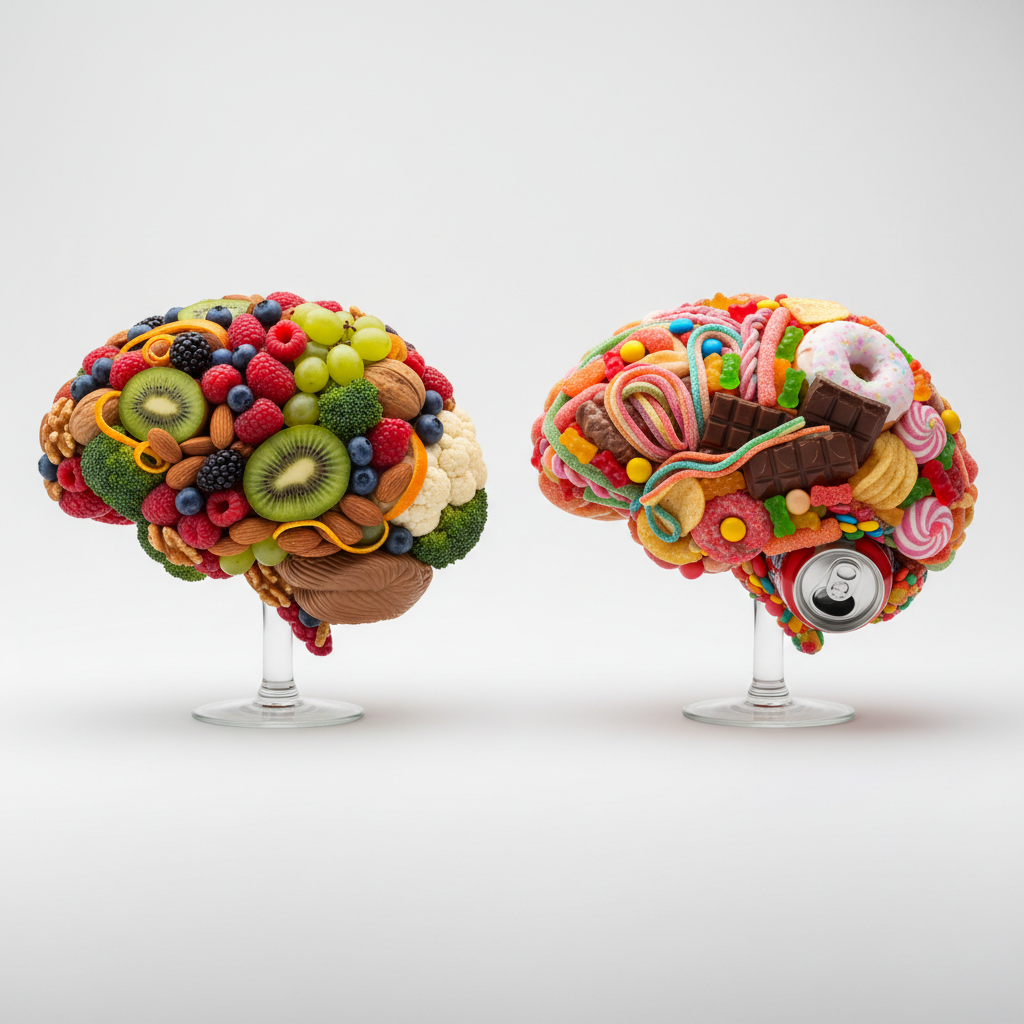
Tirzepatide modifies the brain’s reward circuits involved in food addiction. This revolutionary discovery explains why many patients report a dramatic reduction in their compulsive cravings for food and even alcohol while on treatment.
The Food Addiction Brain
Food addiction shares neurobiological mechanisms with substance addictions. Ultra-processed foods (sugar, fat, salt in specific combinations) activate the mesolimbic dopaminergic circuit, the same circuit involved in dependence on alcohol, tobacco, and drugs. Work by Ashley Gearhardt (Yale Food Addiction Scale) shows that 15 to 20% of the general population and 40% of obese patients meet the criteria for food addiction.
fMRI (functional imaging) reveals that in obese individuals, the sight or smell of ultra-palatable foods activates the nucleus accumbens (reward center) in a manner similar to cocaine in a drug addict. This is not a matter of willpower, but of neurobiology.
How Tirzepatide Changes the Game
GLP-1 and GIP act directly on the nucleus accumbens and the ventral tegmental area, reducing dopamine release in response to food stimuli. In simple terms, tirzepatide ‘turns down the volume’ of the food-related reward signal. Patients describe this effect as ‘food silence’: obsessive thoughts about food diminish or disappear.
A neuroimaging study published in Nature Metabolism (2024) shows that 12 weeks of GLP-1 agonist treatment reduce the activation of the reward circuit in response to food images by 40%. This effect is dose-dependent and gradually fades upon discontinuation of treatment.
Beyond Food: Effects on Other Addictions
- Alcohol: Retrospective studies (JAMA Internal Medicine, 2024) show a 50% reduction in alcohol consumption in patients on GLP-1. Clinical trials are underway.
- Tobacco: Preliminary data suggest a reduction in nicotine cravings. The University of Pennsylvania study is ongoing.
- Pathological Gambling: Case reports mention a reduction in compulsive gambling behaviors with semaglutide.
- Compulsive Shopping: Anecdotal but reported by some patients. The mechanisms are believed to be the same (dopaminergic modulation).
The ‘Food Noise’: A Revolutionary Concept
The ‘food noise’ refers to intrusive and repetitive thoughts about food that occupy the minds of individuals with obesity or food addiction. A KFF (2024) survey shows that 80% of patients on GLP-1 report a significant reduction in food noise, and 30% describe its complete disappearance.
This mental silence is often described as the most transformative effect of the treatment, even before weight loss. Patients report being able to walk past a bakery without being tempted, open the refrigerator without compulsive cravings, and focus on activities other than food.
Long-Term Implications and Risks
The crucial question is: what happens when treatment is stopped? If tirzepatide only masks the addiction without addressing its root causes (trauma, stress, boredom, depression), food noise and compulsive behaviors are likely to return. Psychological support during treatment is therefore essential to develop new non-food coping strategies.
Cognitive behavioral therapies (CBT), mindfulness-based eating awareness training, and emotion management are complementary tools to tirzepatide that help consolidate behavioral changes for the long term.
Track your progress with the MounjaGO app.
FAQ
Does tirzepatide reduce food cravings?
Yes, tirzepatide acts on the brain’s reward circuits, reducing dopaminergic activation in response to food stimuli by 40%. 80% of patients report a significant reduction in ‘food noise’ (obsessive thoughts about food).
What is food noise on Mounjaro?
Food noise refers to intrusive and repetitive thoughts about food. 80% of patients on GLP-1 report its reduction, and 30% report its complete disappearance. It is often described as the most transformative effect of the treatment.
Can tirzepatide help with other addictions?
Preliminary data suggest a 50% reduction in alcohol consumption with GLP-1 and possible effects on smoking and pathological gambling. Clinical trials are underway, but these indications are not yet validated.
Free tool — check your BMI and weight-loss projection.
Related Reading on
- HAS Évaluation of Tirzépatide: Transparency Committee Opinion
- Relationship with Food: How Tirzepatide Changes the Game
- HIIT vs Moderate Cardio Under Tirzepatide: Which is the Best Choice?
- Mediterranean diet and tirzepatide: the ideal combination
- Why Tirzepatide Acts on the Liver, Pancreas, and Brain
Further reading : SURMOUNT-1 trial in the New England Journal of Medicine.
To track the effect on your own curve, logged data beats vague recollections on the day of your appointment: the MounjaGO app brings together weight, doses, side effects and meals, and turns them into a PDF report for your doctor — $12 for lifetime access, no subscription.