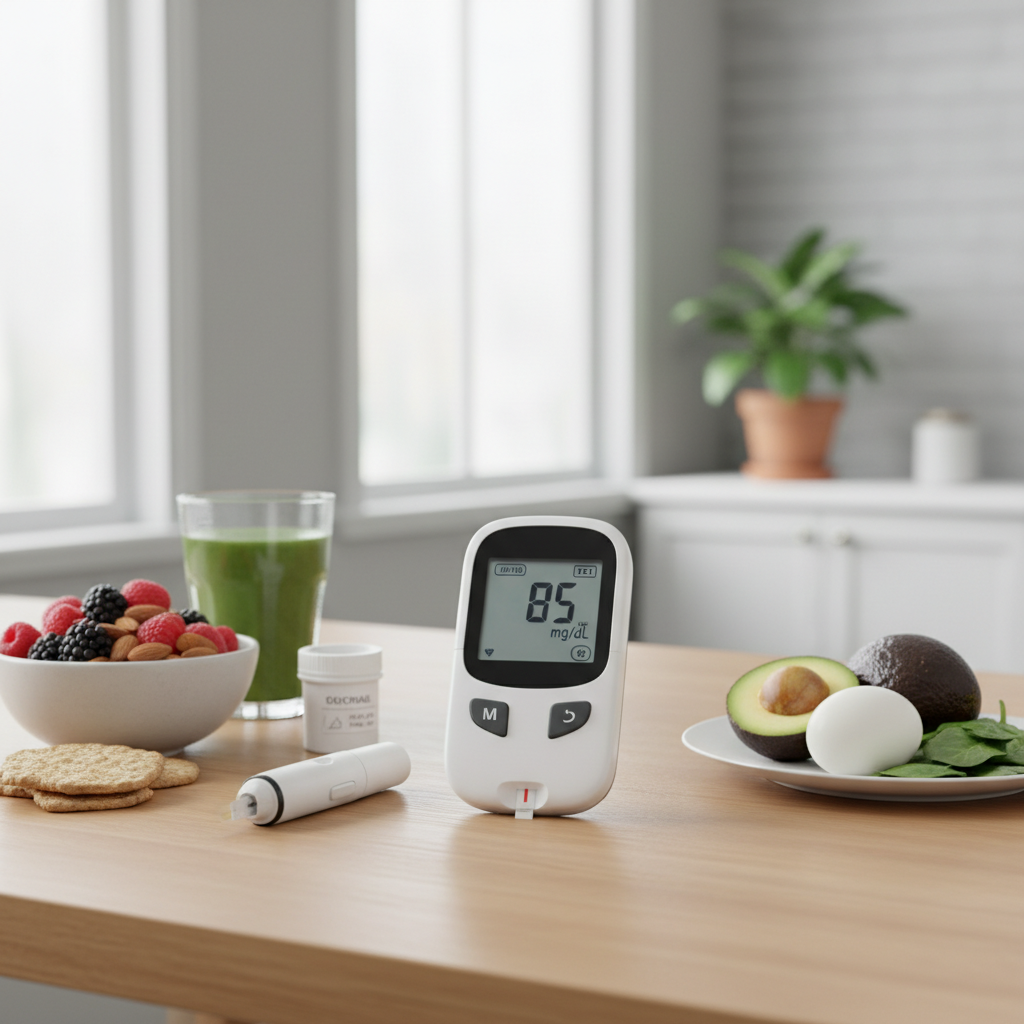
Hypoglycemia with tirzepatide is rare due to its glucose-dependent action. However, certain situations increase the risk.
One of the major advantages of tirzepatide compared to older antidiabetic treatments is its low risk of hypoglycemia. This safety is linked to its glucose-dependent mechanism of action. However, certain clinical situations warrant particular vigilance.
Why is the risk low?
Tirzepatide stimulates insulin secretion only when blood glucose is elevated. When blood glucose drops to normal levels, insulin stimulation automatically ceases. This mechanism, called «glucose-dependent action,» is fundamentally different from that of sulfonylureas (gliclazide, glimepiride) or insulin, which act independently of blood glucose levels.
In the SURMOUNT studies (non-diabetic patients), the rate of clinically significant hypoglycemia (blood glucose < 54 mg/dL) was less than 0.5%, similar to placebo. In the SURPASS studies (diabetic patients), the rate was 0.5 to 1.5%, primarily in patients concurrently taking a sulfonylurea or insulin.
Situations at risk of hypoglycemia
- Combination with a sulfonylurea: gliclazide, glimepiride, glibenclamide. Risk multiplied by 3-4. Sulfonylurea dose reduction recommended.
- Combination with insulin: risk of hypoglycemia requiring a 20 to 50% reduction in insulin doses.
- Prolonged fasting: skipping meals increases the risk, especially in diabetic patients.
- Intense physical exercise: exertion increases glucose consumption and can precipitate hypoglycemia.
- Alcohol consumption: alcohol inhibits hepatic gluconeogenesis, amplifying the risk.
- Renal insufficiency: reduced tirzepatide clearance, prolonging its action.
Recognizing the symptoms of hypoglycemia
- Mild hypoglycemia: tremors, sweating, intense hunger, palpitations, anxiety — blood glucose 54-70 mg/dL.
- Moderate hypoglycemia: confusion, visual disturbances, difficulty concentrating, irritability — blood glucose 40-54 mg/dL.
- Severe hypoglycemia: loss of consciousness, seizures — requires assistance from another person. Medical emergency.
Course of action in case of hypoglycemia
- Check blood glucose with a meter if possible.
- Ingest 15-20 g of fast-acting carbohydrates: 3-4 sugar cubes, 150 mL fruit juice, 1 tablespoon of honey.
- Wait 15 minutes and recheck blood glucose.
- If blood glucose is still < 70 mg/dL: take another 15 g of fast-acting carbohydrates.
- Once blood glucose is normalized: have a snack with slow-acting carbohydrates (bread, crackers).
- In case of loss of consciousness: recovery position, glucagon injection, call emergency services (911/112).
Prevention in diabetic patients
Prevention relies on adjusting concomitant treatments. Your doctor will likely need to reduce the sulfonylurea dose by 50% and basal insulin by 20 to 30% when initiating tirzepatide. Blood glucose self-monitoring (3-4 measurements/day) is recommended during the first few weeks.
Track your progress with the MounjaGO app.
FAQ
Can tirzepatide cause hypoglycemia in non-diabetics?
Extremely rarely. In non-diabetic patients, the glucose-dependent mechanism prevents blood glucose from dropping too low. The risk is almost zero in monotherapy.
Should I reduce my antidiabetic medications if I start Mounjaro?
Potentially yes, especially if you are taking a sulfonylurea or insulin. Never modify your treatments on your own; discuss it with your doctor before starting tirzepatide.
Should I always carry sugar with me while on Mounjaro?
It is recommended for diabetic patients on combined treatment. For non-diabetics on tirzepatide alone, the risk is negligible, and this precaution is not necessary.
Free tool — check your BMI and weight-loss projection.
Related Reading on
- Drug Interactions with Tirzépatide: A Comprehensive Guide
- Diarrhea and Constipation with Tirzepatide: Managing Digestive Issues
- Loose Skin After GLP-1 Weight Loss: Solutions
- Sleep and Mounjaro: How to Sleep Well During Treatment
- Buy Mounjaro Online: Beware of Counterfeits
Further reading : SURMOUNT-1 trial in the New England Journal of Medicine.
To track the effect on your own curve, logged data beats vague recollections on the day of your appointment: the MounjaGO app brings together weight, doses, side effects and meals, and turns them into a PDF report for your doctor — $12 for lifetime access, no subscription.