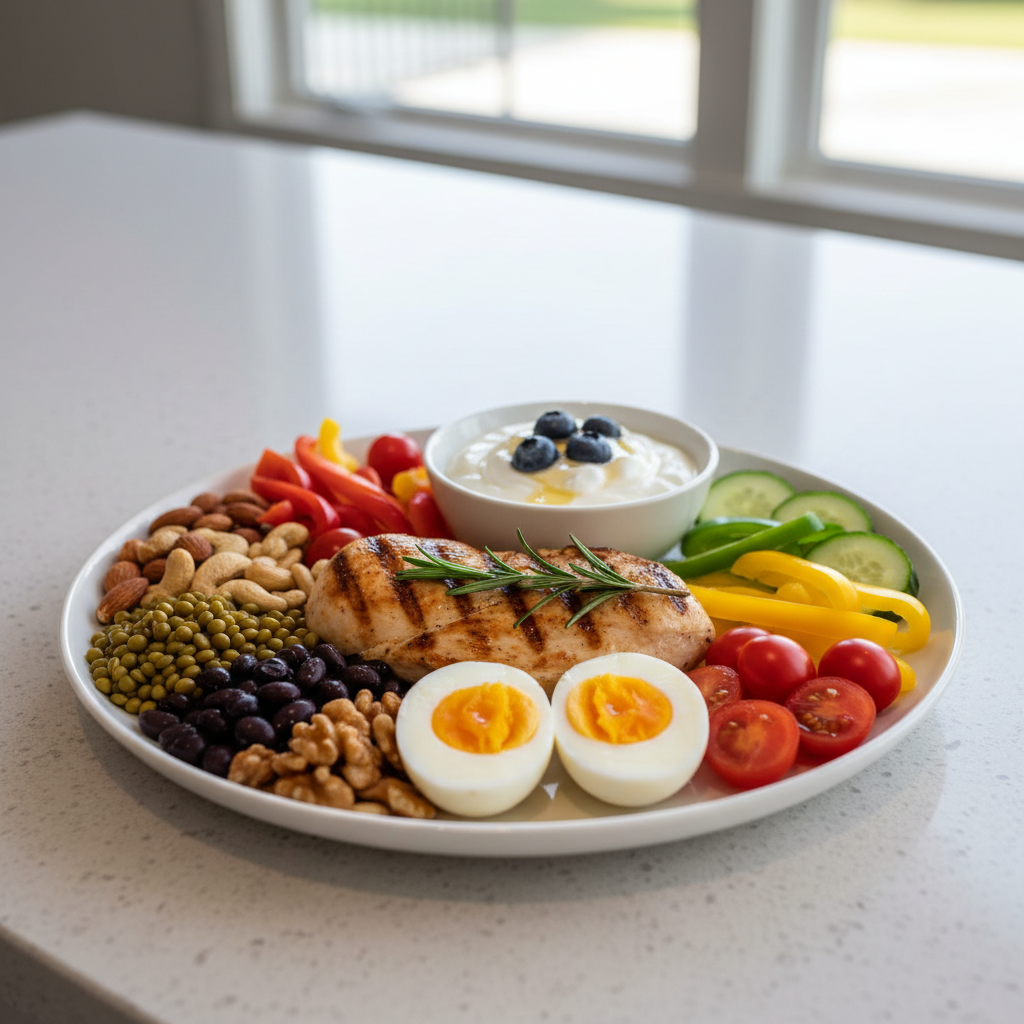
Proteins are the most important nutrient under GLP-1. Discover why and how to optimize your intake.
If you were to remember only one nutritional tip while on tirzepatide, it would be this: increase your protein intake. Proteins play a crucial role in muscle mass preservation, satiety, thermogenesis, and recovery. Yet, the majority of patients on GLP-1 medications do not meet recommended intakes.
Why are proteins so important under GLP-1?
- Muscle preservation: Proteins provide the amino acids necessary for muscle synthesis, limiting sarcopenia associated with rapid weight loss.
- Dietary thermogenesis: The digestion of proteins consumes 20-30% of their caloric value (vs. 5-10% for carbohydrates and 0-3% for fats).
- Prolonged satiety: Proteins are the most satiating macronutrient, complementing tirzepatide’s effect on appetite.
- Maintenance of basal metabolism: By preserving muscle mass, proteins help maintain a higher metabolic rate.
- Skin and hair quality: Keratin (hair) and collagen (skin) require adequate protein intake.
How much protein per day?
Recommendations for patients on GLP-1 medications are higher than for the general population:
- Recommended minimum: 1.2 g/kg of target weight per day.
- Optimal: 1.5 g/kg of target weight per day.
- If resistance exercise: 1.6-2.0 g/kg of target weight per day.
- Example: for a target weight of 70 kg, aim for 84-105 g of protein per day.
- Distribute into 3-4 servings of 25-35 g to optimize muscle synthesis.
Best protein sources
- Eggs: 6 g/egg, complete amino acid profile, inexpensive, versatile.
- Chicken/turkey: 25-30 g per 100 g, lean and easy to digest.
- Fish: 20-25 g per 100 g + omega-3s (salmon, sardines, tuna).
- 0% fat cottage cheese/quark: 8-10 g per 100 g, rich in casein (slow release).
- Greek yogurt: 10-15 g per 150 g, excellent as a snack.
- Legumes: lentils (9 g/100 g cooked), chickpeas, beans — plant-based protein + fiber.
- Tofu/tempeh: 8-15 g per 100 g, complete plant-based options.
- Whey protein: 25-30 g per serving, convenient supplement if appetite is very reduced.
Protein-first strategy
The “protein-first” method involves eating proteins first at each meal, before vegetables and starches. This approach ensures that even if you don’t finish your plate (common with tirzepatide), you will have consumed the most important part of your meal. This is the strategy most recommended by nutritionists specializing in bariatrics.
Signs of insufficient protein intake
- Persistent fatigue despite adequate sleep.
- Excessive hair loss.
- Brittle and ridged nails.
- Slow wound healing.
- Visible muscle wasting (arms, thighs).
- Edema of the extremities (severe cases).
Track your progress with the MounjaGO app.
FAQ
Do protein shakes replace a meal?
They can supplement a meal or serve as a snack, but should not replace more than one meal per day. Whole foods provide micronutrients and fiber that shakes do not contain.
Is too much protein dangerous for the kidneys?
In individuals with normal kidney function, an intake of 1.5-2 g/kg is not harmful. In cases of pre-existing kidney insufficiency, intake must be adjusted with your nephrologist.
Are plant-based proteins sufficient?
Yes, provided you vary sources (legumes + cereals + soy) to obtain all essential amino acids. Soy, quinoa, and buckwheat contain all 9 essential amino acids.
Free tool — check your BMI and weight-loss projection.
Related Reading on
- Dietary Fibers and GLP-1: A Winning Duo for Digestion
- Managing Festive Meals and Restaurant Outings on Mounjaro
- Couple and Weight Loss on GLP-1: Managing Relational Dynamics
- Social Pressure and GLP-1: Addressing Questions from Your Inner Circle
- Eating Disorders and GLP-1: Essential Precautions
Further reading : WHO healthy diet fact sheet.
To track the effect on your own curve, logged data beats vague recollections on the day of your appointment: the MounjaGO app brings together weight, doses, side effects and meals, and turns them into a PDF report for your doctor — $12 for lifetime access, no subscription.