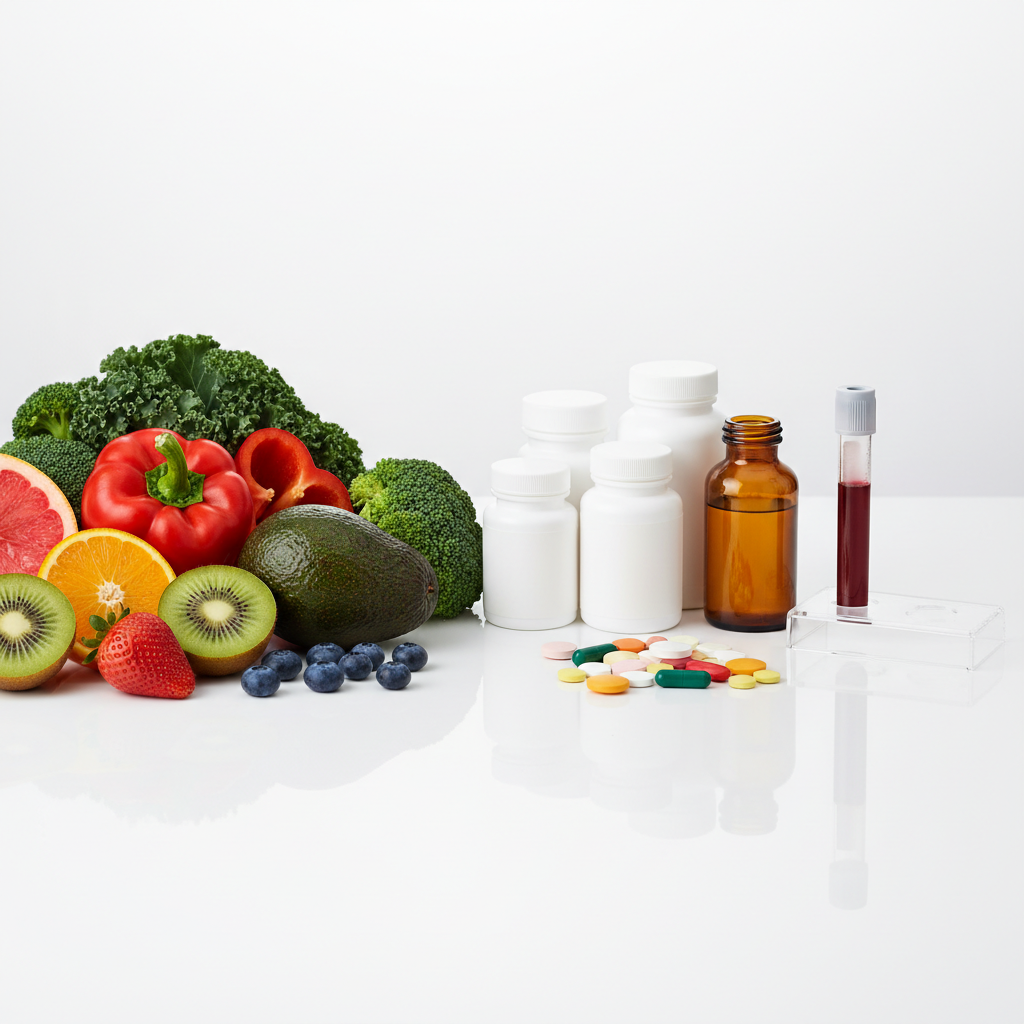
Vitamin and mineral deficiencies are an underestimated risk of GLP-1 agonist treatments. The appetite reduction induced by tirzepatide can lead to significant nutritional deficits that are essential to detect and prevent.
Mechanisms of Deficiencies Under GLP-1 Agonists
Tirzepatide reduces caloric intake by 25 to 40% on average (SURMOUNT-1, NEJM 2022). This reduction is mechanically accompanied by a decrease in micronutrient intake. Furthermore, delayed gastric emptying and episodes of nausea/vomiting reduce the intestinal absorption of certain nutrients, particularly iron, calcium, and B vitamins.
A multicenter observational study published in Obesity (2024) involving 500 patients on GLP-1 agonists for 12 months identified biological deficiencies in 35% of them, primarily in vitamin D (28%), iron (18%), vitamin B12 (12%), and zinc (15%).
Vitamin D: The Most Frequent Deficiency
Vitamin D is stored in adipose tissue. Rapid fat mass loss under tirzepatide releases sequestered vitamin D, but this release is insufficient to maintain optimal levels. Vitamin D deficiency (< 30 ng/mL) is associated with accelerated muscle loss, an increased risk of fractures, and a weakened immune response.
Recommendation: Blood test (25-OH-D) before treatment, then every 6 months. Supplementation of 2000 to 4000 IU/day to maintain a level between 40 and 60 ng/mL. In case of severe deficiency (< 20 ng/mL), an initial protocol of 50,000 IU/week for 8 weeks may be prescribed by your doctor.
Iron and Anemia Under GLP-1 Treatment
Reduced red meat intake (often poorly tolerated under tirzepatide) and digestive issues limit iron absorption. Women of childbearing age are particularly at risk. Warning signs include: unusual fatigue, pallor, shortness of breath, brittle hair, and ridged nails.
Recommended assessment: ferritin, transferrin saturation coefficient, CBC. If ferritin < 30 ug/L, iron bisglycinate supplementation (14-28 mg/day) is preferred over ferrous sulfate for its better digestive tolerance. Take iron with vitamin C and away from tea, coffee, and dairy products.
Vitamin B12: Increased Vigilance Under Metformin
Vitamin B12 is a major concern for diabetic patients simultaneously taking metformin and tirzepatide. Metformin reduces intestinal B12 absorption by 10 to 30% (Diabetes Care, 2022). B12 deficiency can cause megaloblastic anemia, peripheral neuropathies, and cognitive disorders.
Recommended dosage: serum vitamin B12 and methylmalonic acid annually. Supplementation: 1000 ug/day orally, or monthly intramuscular injection in case of malabsorption.
Other Deficiencies to Monitor
- Calcium: essential during weight loss to prevent osteoporosis. Target intake: 1000-1200 mg/day (diet + supplement if necessary). Always combine with vitamin D
- Magnesium: frequent deficiency (60% of the French population). Under GLP-1, vomiting exacerbates losses. Bisglycinate supplementation: 300-400 mg/day in the evening
- Zinc: crucial for immunity and wound healing. Rapid weight loss increases needs. Signs of deficiency: loss of taste, hair loss. Supplementation: 15-25 mg/day
- Potassium: repetitive vomiting can cause hypokalemia. Prioritize food sources: banana, avocado, spinach, legumes
- Folates (B9): essential for women of childbearing age. An intake of 400 ug/day is recommended, increased to 800 ug if pregnancy is planned
Recommended Biological Monitoring Schedule
- Before starting treatment: complete initial assessment (CBC, ferritin, B12, 25-OH-D, calcium, magnesium, zinc, albumin, pre-albumin)
- At 3 months: control if symptoms or initial deficiency detected
- At 6 months: complete monitoring assessment
- At 12 months and annually: complete assessment + adjustment of supplementation
- At each dose change: clinical reevaluation of deficiency symptoms
Track your progress with the MounjaGO app. It’s $12 for life (one-time payment, no subscription), a Web app — no installation required, and uses 100% local storage (maximum privacy).
FAQ
What deficiencies should be monitored under Mounjaro?
The most frequent deficiencies under tirzepatide are: vitamin D (28% of patients), iron (18%), zinc (15%), and vitamin B12 (12%). A complete blood test is recommended before treatment and then every 6 months.
Is vitamin D mandatory under GLP-1?
Vitamin D supplementation (2000-4000 IU/day) is strongly recommended because rapid fat mass loss mobilizes reserves without replenishing them. Regular blood testing allows for dose adjustment.
What are the signs of iron deficiency under tirzepatide?
Unusual fatigue, pallor, shortness of breath on exertion, brittle hair, and ridged nails. A ferritin test will confirm the diagnosis. Prefer iron bisglycinate, which is better tolerated digestively.
Free tool — check your BMI and weight-loss projection.
Related Reading on
- Gastroparesis under GLP-1 Agonists: Symptoms and Prevention
- Alcohol and Mounjaro: Risks and Recommendations
- Foods to Avoid on Mounjaro: What Worsens Nausea
- Loose Skin After GLP-1 Weight Loss: Solutions
- Eating Disorders and GLP-1: Essential Precautions
Further reading : SURMOUNT-1 trial in the New England Journal of Medicine.
To track the effect on your own curve, logged data beats vague recollections on the day of your appointment: the MounjaGO app brings together weight, doses, side effects and meals, and turns them into a PDF report for your doctor — $12 for lifetime access, no subscription.