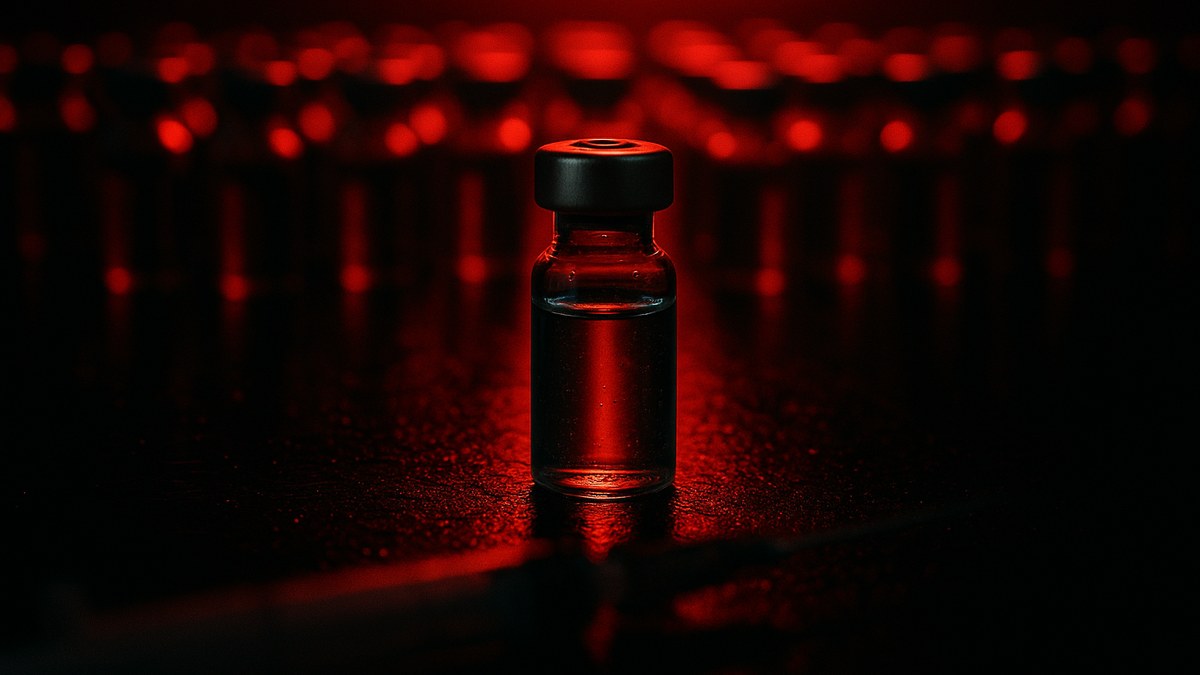
Open TikTok and you cannot miss them: weight loss peptides are having a moment. Retatrutide “ahead of the market”, BPC-157 “for recovery”, DIY vial kits shipped in 48 hours. All without a prescription. And all marketed as the smart weight loss shortcut, a cheap stand-in for GLP-1 treatment. Every week, the same question lands in our inbox: should you be afraid? Our answer takes ten points. It is unambiguous: you should be wary. Not on principle, but for precise, documented reasons. Here they are.
Where the craze comes from
The success of Mounjaro created enormous demand. It also created two frustrations: price and access. So online sellers filled the gap. Their products are presented as equivalent to authorised medicines, at a fraction of the cost. The word “peptide” does the rest. It sounds scientific, natural, almost harmless. As a result, buying peptides online feels as ordinary as ordering vitamins. That blur is exactly what needs clearing up.
Weight loss peptides: the 10 answers
1. “Peptide” does not mean harmless
A peptide is a short chain of amino acids. Nothing more. Semaglutide and tirzepatide are peptides. Yet they are powerful prescription medicines, and for good reason. So saying “it’s just a peptide” is like saying “it’s just a molecule”. It tells you nothing about effects, risks or legality.
2. What you are buying is not a medicine
Vials sold online almost always carry the label “research use only”. In other words: not intended for humans. That label is not a formality. It means no health authority has evaluated the product. It also means the seller disclaims all responsibility the moment you inject it. Indeed, the FDA specifically warns about unapproved GLP-1 products sold outside the pharmacy chain.
3. Nobody checks the dose or the purity
An authorised medicine is manufactured under good practices. Every batch is tested. A grey-market vial, however, can contain anything. The stated dose, half of it, twice it. Synthesis impurities, bacterial residue. Or nothing at all. You only find out after injecting it. Even then, without lab analysis, an under-dosed product and an ineffective one look identical.
4. Retatrutide is not approved anywhere
The star of the grey market has nicknames: “reta” or “r3” on forums, where searches for it keep climbing. Yet it is an experimental drug. Retatrutide is still in clinical trials. No agency in the world has authorised it, for any use. The right dose, the adverse effects, the contraindications: the trials are measuring them right now. The online seller, meanwhile, claims to already know. Our retatrutide vs tirzepatide comparison covers where the molecule actually stands.
5. BPC-157 and friends: banned in sport, never approved
BPC-157 is sold for “recovery”. In reality, it sits among the non-approved substances prohibited by the World Anti-Doping Agency. USADA explains why, and the WADA prohibited list covers such peptides broadly. An athlete who tests positive risks a career. Everyone else risks a product whose safety in humans has never been demonstrated. The same logic applies to GHK-Cu, the “cosmetic” peptide whose injection searches are soaring. It is sold for skin and hair. Yet it has never been evaluated as an injection in humans.
6. Injection adds its own dangers
These products arrive as powder you reconstitute yourself. Bacteriostatic water, concentration math, an insulin syringe. So every step is an opportunity for error. Dilution, sterility, injection site. Pharmaceutical pens exist precisely to eliminate those manipulations. Here, you become your own compounding pharmacist. No training, no oversight.
7. The market is a magnet for counterfeiters
Where there is demand and zero traceability, fraud thrives. The EMA documents the falsified-medicines phenomenon. Moreover, we have already described the scams targeting Mounjaro in our article on buying online and counterfeits. The peptide grey market combines both problems. An unverifiable product, and an unreachable seller.
8. Without medical follow-up, warning signs go unnoticed
A supervised GLP-1 treatment comes with a doctor. They know your history, adjust the dose, react to side effects. With a peptide bought online, nobody monitors anything. Not interactions with your other medicines, not early signs of pancreatitis, not family contraindications. The side effects of legitimate GLP-1s are serious enough. The NHS page on tirzepatide lists them. Those at least come with a framework. The DIY equivalent has none.
9. Legally, you are on your own
Depending on the country, importing these products for human use is illegal. At best, it sits in a grey zone the sellers carefully cultivate. In practice, your parcel can be seized. You have no recourse against an offshore website. And no insurance will cover an accident involving a “research use only” product. The contract is therefore asymmetric: you carry all the risk, the seller none.
10. Legal alternatives exist — calculate the real cost
The grey market’s main selling point is price. But the real gap deserves arithmetic rather than fantasy. Our Mounjaro price simulator by country, coverage included, shows what supervised weight loss treatment actually costs. Drawn to next-generation molecules? Official clinical trials remain the only safe route. There, the product is authentic, dosed and monitored.
The warning signs to watch for
Still hesitating? Here is the simplest reading grid. A serious website does not sell medicine without a prescription. So any platform offering you one has already answered the question of its own reliability. The other signals take seconds to spot.
- The “research use only” label in small print, contradicted by all the marketing around it: before/after testimonials, “suggested” dosing protocols, injection calculators.
- Payment by cryptocurrency or wire transfer only. No legitimate health business refuses traceable payment methods.
- Prices that defy logic. A molecule still in clinical trials has no “wholesale price”. What you are paying for is a powder whose nature nobody guarantees.
- No verifiable physical address, no identifiable pharmacist, no coherent legal notices.
- “Certificates of analysis” supplied by the seller itself. An unverifiable PDF issued by the party with an interest in selling is not quality control. It is a sales argument.
None of these signals alone proves fraud. Their accumulation, however, sketches an entire market built to escape accountability. That is the exact opposite of what you want from a product you inject. There is also a quieter tell worth naming: the burden of proof is always pushed onto you. Legitimate medicine comes with pharmacovigilance, batch recalls and a pharmacist you can call. The grey market replaces all of that with a Discord channel. When something goes wrong, there is no hotline and no authority that registered your purchase. That silence is the true price of the discount. It is worth weighing before the first order, not after.
So — should you be afraid?
Fear is not a health strategy. Information is. The takeaway fits in one sentence: the problem is not the word “peptide”, it is the total absence of control between the website’s promise and the vial’s content. Serious weight loss treatment involves a diagnosis, a prescription and follow-up. The grey market removes all three at once — and charges you for the privilege.
Already on a legitimate treatment? Then your best protection is solid data. The MounjaGO app logs weight, injections, side effects and meals. It then turns them into a PDF report for your doctor — $12 for lifetime access, no subscription. Our walkthrough of all MounjaGO tracking features shows exactly what the app covers. Against a market that thrives on blur, keeping your own numbers is already a form of clarity.