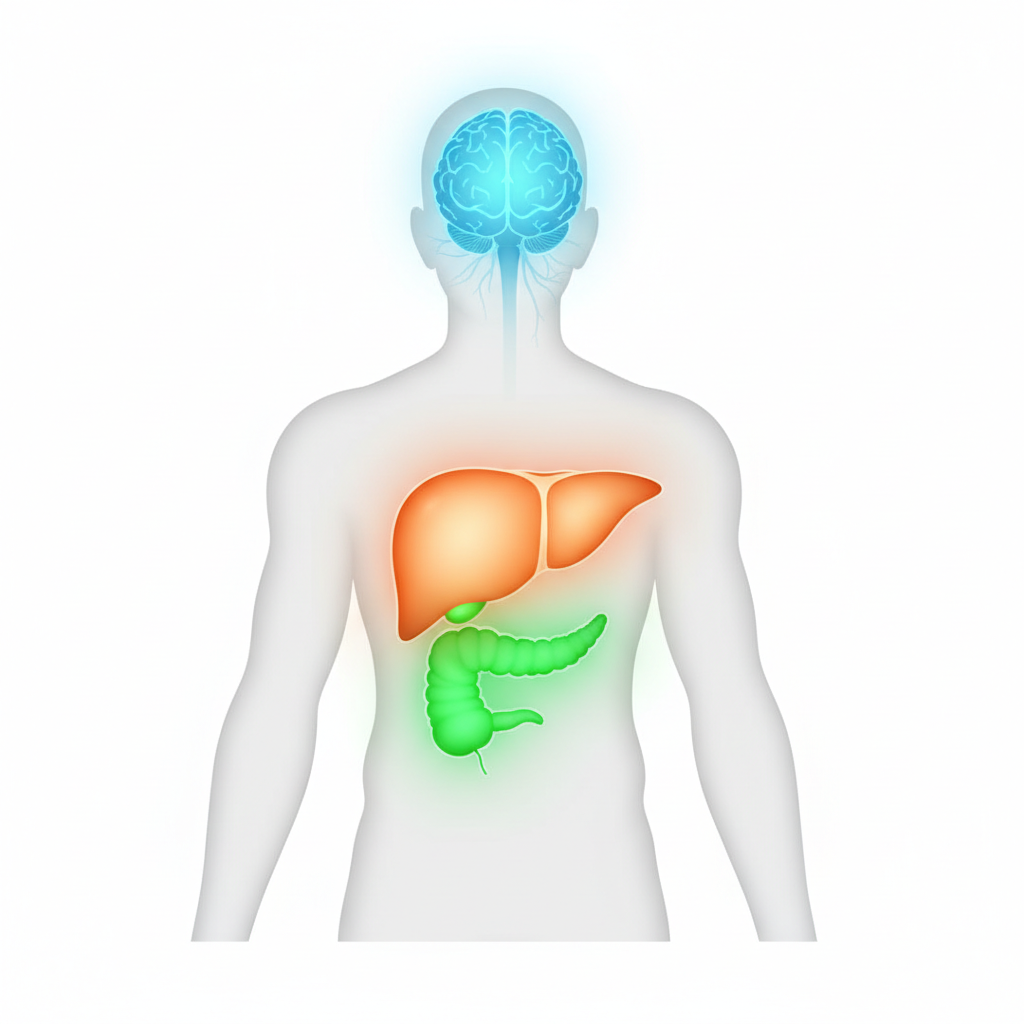
Tirzepatide does more than just reduce appetite: it simultaneously acts on three vital organs to combat obesity and type 2 diabetes.
Tirzepatide, the active ingredient in Mounjaro and Zepbound, is often presented as a simple injectable appetite suppressant. This reductive view ignores the complexity of its mechanism of action. In reality, this molecule acts in a coordinated manner on three key organs: the brain, the pancreas, and the liver. Understanding these interactions allows for a better appreciation of why tirzepatide represents a major therapeutic advance.
Action on the Brain: Recalibrating the Appetite Thermostat
The brain, and more precisely the hypothalamus, is the center for appetite regulation and energy expenditure. Tirzepatide acts on this region by activating GLP-1 and GIP receptors present in the arcuate nucleus of the hypothalamus. This dual activation produces a powerful satiety signal that goes beyond what GLP-1 agonists alone can achieve.
According to a study published in Nature Medicine (2023), tirzepatide modifies the perception of food reward in the dopaminergic system. Patients report not only less hunger but also a reduction in compulsive cravings (food cravings), particularly for fatty and sugary foods. This mechanism explains why weight loss with tirzepatide is significantly superior to that observed with semaglutide: the brain receives a dual stop signal.
Furthermore, tirzepatide influences the regulation of body temperature and basal energy expenditure via the hypothalamus. Preclinical data suggest an increase in thermogenesis in brown adipose tissue, contributing to increased caloric expenditure even at rest. This central action is therefore multidimensional: satiety, reduction of cravings, and metabolic increase.
Action on the Pancreas: Restoring Glycemic Balance
The pancreas is the central organ for blood glucose regulation. Tirzepatide exerts a particularly sophisticated action there by targeting the beta and alpha cells of the islets of Langerhans. Via the activation of GLP-1 receptors, the molecule stimulates insulin secretion in a glucose-dependent manner. This means that insulin is released only when blood glucose is high, thus minimizing the risk of hypoglycemia.
The SURPASS-1 study published in the New England Journal of Medicine demonstrated a reduction in HbA1c of 1.87% to 2.07% depending on the dose, exceptional figures in the treatment of type 2 diabetes. The simultaneous activation of GIP receptors amplifies this effect by improving the sensitivity of beta cells to insulin and promoting the survival and proliferation of pancreatic beta cells.
Tirzepatide also suppresses glucagon secretion by alpha cells in a glucose-dependent manner. Glucagon, a hyperglycemic hormone, is often produced in excess in diabetic patients. Its suppression contributes to better post-prandial glycemic stability. Remarkably, this pancreatic action is neuroprotective for beta cells, suggesting a potential for modifying the natural history of type 2 diabetes.
Action on the Liver: Combating Steatosis and Insulin Resistance
The liver is a central metabolic organ often overlooked in discussions about anti-obesity treatments. However, in obese patients, non-alcoholic fatty liver disease (NAFLD/NASH) affects up to 70% of individuals. Tirzepatide acts on the liver directly and indirectly to reverse this condition.
Activation of hepatic GIP receptors reduces de novo lipogenesis (the liver’s production of new fats) and improves fatty acid oxidation. A phase 2 study published in the Lancet (2024) showed that tirzepatide reduced hepatic fat content by more than 50% in 52 weeks, with resolution of NASH in a significant proportion of patients.
Furthermore, the liver is the primary site of insulin resistance in type 2 diabetes. Tirzepatide improves hepatic insulin sensitivity, reducing fasting hepatic glucose production. This triple hepatic action — fat reduction, improved insulin sensitivity, and decreased gluconeogenesis — contributes significantly to the overall metabolic benefits of the treatment.
The Synergy of the Three Organs: An Effect Superior to the Sum of Its Parts
What makes tirzepatide unique is not its action on each organ in isolation, but the synergy between these three sites of action. When the brain reduces appetite, the pancreas optimizes the management of absorbed glucose, and the liver more efficiently metabolizes fats. This virtuous cycle amplifies each individual benefit.
The SURMOUNT studies demonstrated that this multi-organ approach allows for an average weight loss of 20 to 25% of initial body weight, a result historically reserved for bariatric surgery. The simultaneous reduction of cardiovascular risk factors (glycemia, triglycerides, blood pressure, inflammation) confirms the systemic impact of this triple action.
Emerging research, including a meta-analysis published in Diabetes Care (2024), suggests that tirzepatide may also have beneficial effects on the kidneys, cardiovascular system, and visceral adipose tissue, further broadening the spectrum of its action. These data reinforce the idea that tirzepatide is not just a weight-loss drug, but a global metabolic treatment.
Implications for Medical Monitoring
Understanding the target organs of tirzepatide has practical implications for patient monitoring. Physicians must monitor not only weight and blood glucose, but also liver function (transaminases, ultrasound), pancreatic function, and global metabolic markers. The MounjaGO app allows you to track all these parameters in one place, facilitating doctor-patient communication.
In conclusion, tirzepatide perfectly illustrates precision medicine applied to obesity. By simultaneously targeting the brain, pancreas, and liver, it addresses the multiple facets of metabolic disease. It is this holistic approach that explains its unprecedented clinical results.
FAQ: Tirzepatide and Target Organs
Can tirzepatide damage the liver?
No, on the contrary. Clinical studies show that tirzepatide reduces hepatic fat and improves markers of liver function. Patients with fatty liver disease (NAFLD) particularly benefit from the treatment.
How does tirzepatide act on the brain without neurological side effects?
Tirzepatide acts on specific hormonal receptors in the hypothalamus, the appetite regulation area. It does not cross the blood-brain barrier globally and does not affect cognitive functions.
Is the pancreas at risk with tirzepatide?
The risk of pancreatitis exists but remains very low (less than 0.2% in SURMOUNT trials). Tirzepatide actually has a protective effect on pancreatic beta cells. However, regular monitoring of lipase and amylase is recommended.
Free tool — check your BMI and weight-loss projection.
Related Reading on
- Tirzépatide and Cholestérol: Impact on Lipid Profile
- Tirzepatide in Obese Adolescents: The SURMOUNT-Jr Study
- Weight Regain After Tirzepatide Discontinuation: What Do the Data Say?
- Tirzepatide and Fatty Liver Disease (NASH): Promising Results
- Tirzepatide and Body Composition: Fat vs. Muscle
Further reading : SURMOUNT-1 trial in the New England Journal of Medicine.
To track the effect on your own curve, logged data beats vague recollections on the day of your appointment: the MounjaGO app brings together weight, doses, side effects and meals, and turns them into a PDF report for your doctor — $12 for lifetime access, no subscription.