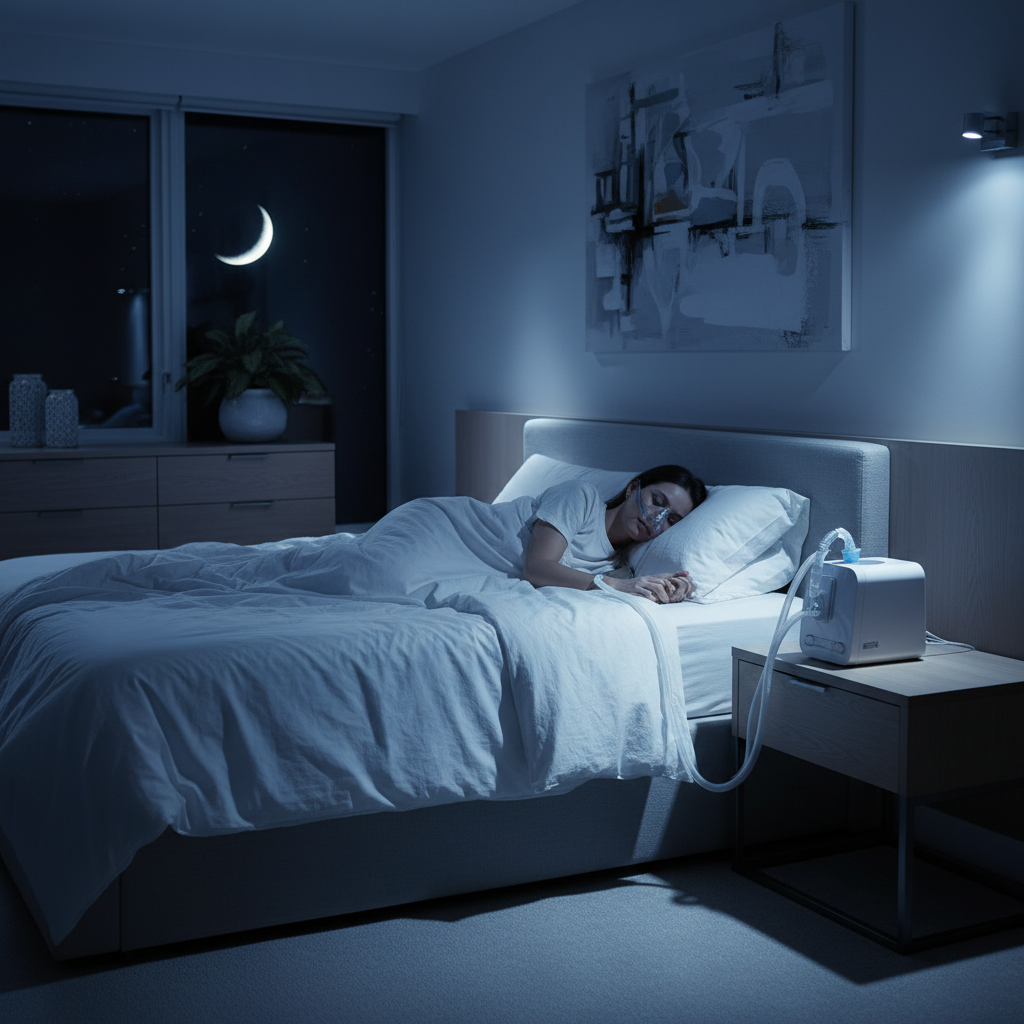
The SURMOUNT-OSA study demonstrates that tirzepatide significantly reduces the severity of obstructive sleep apnea, offering an alternative to mechanical treatments.
Obstructive sleep apnea (OSA) affects approximately 30 to 40% of obese individuals. This condition, characterized by repeated interruptions of breathing during sleep, increases cardiovascular risk and significantly deteriorates quality of life. The SURMOUNT-OSA study, published in the New England Journal of Medicine in 2024, provides major results on the efficacy of tirzepatide for this indication.
SURMOUNT-OSA Study Design
The study recruited 469 obese adults (BMI ≥ 30) with moderate to severe OSA (apnea-hypopnea index [AHI] ≥ 15 events/hour), randomized into two parallel studies: one for patients unable to use CPAP (continuous positive airway pressure), and the other for patients already using CPAP. All received tirzepatide (10 or 15 mg) or a placebo for 52 weeks.
Results on Sleep Apnea
The results are spectacular. In patients without CPAP, tirzepatide reduced AHI by an average of 27.4 events/hour (vs 4.8 under placebo), representing a reduction of over 50%. In patients with CPAP, the reduction was 30.4 events/hour. Remarkably, 42 to 50% of patients treated with tirzepatide saw their OSA resolved (AHI < 5), reaching a threshold considered normal.
These results are superior to those of semaglutide in similar populations, confirming the advantage of the dual GIP/GLP-1 mechanism. Weight loss (18-20% under tirzepatide) is the primary mediator of improvement, but direct effects of tirzepatide on airway inflammation and redistribution of cervical fat could also contribute.
Associated Improvements
- Nocturnal oxygen saturation: improvement of 3 to 5 percentage points
- Daytime sleepiness (Epworth scale): significant reduction of 4 to 5 points
- Quality of life: improvement of 8 to 10 points on the SF-36 questionnaire
- Nocturnal blood pressure: reduction of 5 to 7 mmHg (important because nocturnal hypertension is a marker of cardiovascular risk)
- CRP (inflammatory marker): reduction of 40 to 55%
Implications for Patients with Sleep Apnea
These results open a new therapeutic pathway for millions of patients suffering from OSA and obesity. Currently, CPAP is the reference treatment, but adherence is poor: 30 to 50% of patients abandon their device within the first year. Tirzepatide could offer a pharmacological alternative for patients intolerant to CPAP, or a complement allowing for reduced necessary pressure.
HAS (French National Authority for Health) and the French Society of Pulmonology may be led to integrate GLP-1/GIP agonists into recommendations for the management of obese OSA. In the meantime, any obese patient suffering from sleep apnea should discuss the potential benefit of tirzepatide with their doctor.
Monitoring sleep quality is a key element of treatment. The MounjaGO application allows you to record your daily symptoms, including fatigue and sleep quality, to objectively track improvements with your doctor.
FAQ: Mounjaro and Sleep Apnea
Can Mounjaro replace my CPAP machine?
Potentially, in some patients. SURMOUNT-OSA shows that 42-50% of patients completely resolve their apnea with tirzepatide. However, the decision to stop CPAP must be made with your pulmonologist after a polysomnographic check.
After how many pounds lost does apnea improve?
An improvement in AHI is generally observed with 5 to 10% weight loss. The effect is progressive and proportional to the loss: the greater the loss, the more marked the reduction in AHI.
Can apnea return if I regain weight?
Yes. Sleep apnea is closely linked to weight, particularly cervical and abdominal fat. Weight regain generally leads to a reappearance of symptoms, hence the importance of long-term treatment.
Free tool — check your BMI and weight-loss projection.
Related Reading on
- Mounjaro and Heart Failure: The SUMMIT Study
- Mounjaro and High Blood Pressure: Effects on Blood Pressure
- Average Weight Loss with Mounjaro: What the Studies Say
- SURPASS-CVOT: Does Mounjaro Reduce Cardiovascular Risk?
- SURMOUNT-1 Study: Detailed Weight Loss Results with Tirzepatide
Further reading : SURMOUNT-1 trial in the New England Journal of Medicine.
To track the effect on your own curve, logged data beats vague recollections on the day of your appointment: the MounjaGO app brings together weight, doses, side effects and meals, and turns them into a PDF report for your doctor — $12 for lifetime access, no subscription.