What to eat on Mounjaro when your stomach is protesting? Almost everyone on the treatment asks this at some point, usually in the 24 to 48 hours after the injection: appetite gone, mild queasiness, and a sudden aversion to meals you loved the day before. The good news is that your plate is one of the most effective tools for getting through those days. This article gives you seven gentle recipes — quick to prepare and substantial enough to protect your protein intake — plus the simple habits that separate a rough day from a normal one. Nothing here is medical advice: if your nausea is severe or lasts several days, that conversation belongs with your doctor.
Why appetite changes on injection days
Tirzepatide slows stomach emptying and acts on satiety signals — which is exactly what makes it effective for weight loss. The trade-off, especially early in treatment and after each dose increase, is slower digestion: a normal meal can feel like it just sits there, and cooking smells can suddenly turn your stomach. Nausea is among the most commonly reported side effects of the treatment, as noted in the NHS patient page on tirzepatide.
In practice, that means adjusting three things on injection days: portion size (smaller), texture (softer) and cooking method (steaming, broth or gentle oven heat rather than frying). That is precisely the brief behind the recipes below.
What to eat on Mounjaro on injection days: 7 gentle recipes
1. Chicken and ginger broth with rice
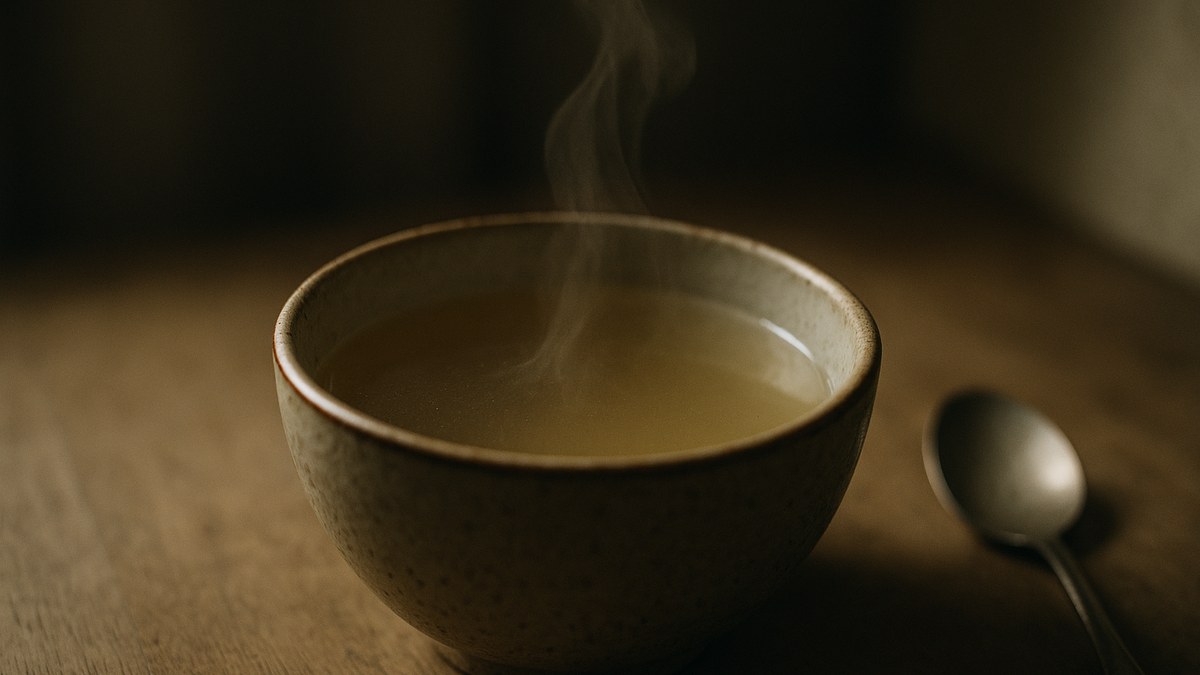
The classic for fragile stomachs, and for good reason: warm, salty, hydrating and easy to digest. Simmer 500 ml of chicken stock with two slices of fresh ginger for ten minutes, then add three tablespoons of cooked rice and some shredded cooked chicken breast. Ginger has a long tradition as a nausea remedy, and the broth replaces the water and salt you miss on low-appetite days.
2. Banana and cinnamon porridge
40 g of rolled oats, 200 ml of semi-skimmed milk or soy drink, half a mashed banana, a pinch of cinnamon. Cook gently for five minutes, stirring. It is warm, lightly sweet and has no aggressive smell — and the milk version already delivers around 10 g of protein. If milk does not sit well, water works too; stir in a spoonful of Greek yogurt once the porridge has cooled slightly.
3. Sweet potato mash with steamed chicken
One sweet potato boiled and mashed with a drizzle of olive oil, served with 100 g of steamed, shredded chicken breast. Soft textures, minimal seasoning, decent satiety. Sweet potato tends to be well tolerated when raw vegetables and fibrous greens have stopped agreeing with you.
4. White fish and rice with lemon
The most restrained duo on this list: 100 g of steamed cod or pollock with a squeeze of lemon, served over plain white rice. White fish is one of the most digestible proteins there is, and skipping added fat avoids slowing your stomach down even further.
5. Greek yogurt, apple purée and crispbread
For when cooking is simply beyond you: plain Greek yogurt (about 10 g of protein per 100 g), unsweetened apple purée, two wholegrain crispbreads. A cold, odour-free “meal” ready in thirty seconds — often the most realistic option on the evening of the injection itself. Cold dishes release far less smell than hot ones, which genuinely helps when your sense of smell has joined the rebellion.
6. Blended carrot and ginger soup
Cook 400 g of carrots in vegetable stock with a slice of ginger, blend until smooth, and stir in a spoonful of fromage frais or thick yogurt before serving for the protein touch. Velvety texture, neither rich nor bland. Our guide to protein-rich soups has five more variations if this one becomes your routine.
7. Wholegrain toast with a soft-boiled egg
A lightly toasted slice of wholegrain bread, an egg boiled for six minutes, a pinch of salt. A soft-boiled egg is easier on the stomach than fried or butter-scrambled, and this little plate provides complete protein for minimal effort. Best saved for days when the nausea is mild rather than at its peak.
The habits that change everything
Recipes are only half the story; how you eat matters as much as what is on the plate.
- Split your meals. Three large plates become five or six mini-meals. A slowly emptying stomach copes badly with volume.
- Eat slowly. Put the fork down between bites; satiety arrives faster on treatment, so give it time to speak before you overshoot.
- Drink between meals, not during. A large glass of water mid-meal fills a stomach that is already slow. Our guide on hydration on Mounjaro covers what to aim for across the day.
- Avoid fat, fried food and heavy spice for the 48 hours after the jab: they are the three most commonly cited nausea triggers.
- Choose cold or lukewarm over piping hot. Less smell, less queasiness.
- Plan ahead. Cook your gentle portions the day before the injection; on the day itself, all you have to do is reheat.
How much protein should you aim for on those days?
This is the real stake of low-appetite days. On GLP-1 treatment, part of the weight you lose can come from muscle mass, and protein is the main defence against that. General guidance during weight loss puts the requirement at roughly 1.2 to 1.6 g of protein per kilo of body weight per day — around 80 to 105 g for someone weighing 65 kg. On a day when you can barely manage three small plates, hitting that total takes deliberate thought at every sitting.
The simplest approach: aim for 20 to 25 g of protein per mini-meal rather than banking on one large dinner that will never go down. A 150 g pot of Greek yogurt gives about 15 g, 100 g of chicken breast about 30 g, two eggs about 13 g, 100 g of white fish about 20 g. Three of those spread across the day will usually rescue the total.
When nothing solid works, liquid protein takes over: milk, soy drink, kefir, or a soup enriched with a spoonful of skimmed milk powder. It is less pleasant than a real meal, but infinitely better than a 20 g protein day. And if you are splitting meals heavily, write down what you eat: across five small sittings, it is remarkably easy to overestimate your total.
What if nothing goes down?
One very low-appetite day is not alarming in itself: focus on fluids (water, broth, herbal tea) and a few bites of protein, however modest. Repeated vomiting, an inability to keep fluids down, or nausea that settles in for more than a few days is a different matter — call your doctor, because sometimes it is the dose-escalation schedule that needs adjusting, and that decision is theirs to make.
Keep an eye on the bigger picture too: if the difficult days start stacking up, write them down. The MounjaGO app lets you log meals, weight, injections and side effects in one place, then export a clean PDF report for your appointment — $12 for lifetime access, no subscription. And to anchor your starting point or track your progress, our BMI calculator with weight-loss projection is the simplest way to put numbers on it.
Injection days do not last forever: for most people, tolerance improves markedly after a few weeks at a stable dose. Until then, a well-made broth is worth a thousand pep talks.