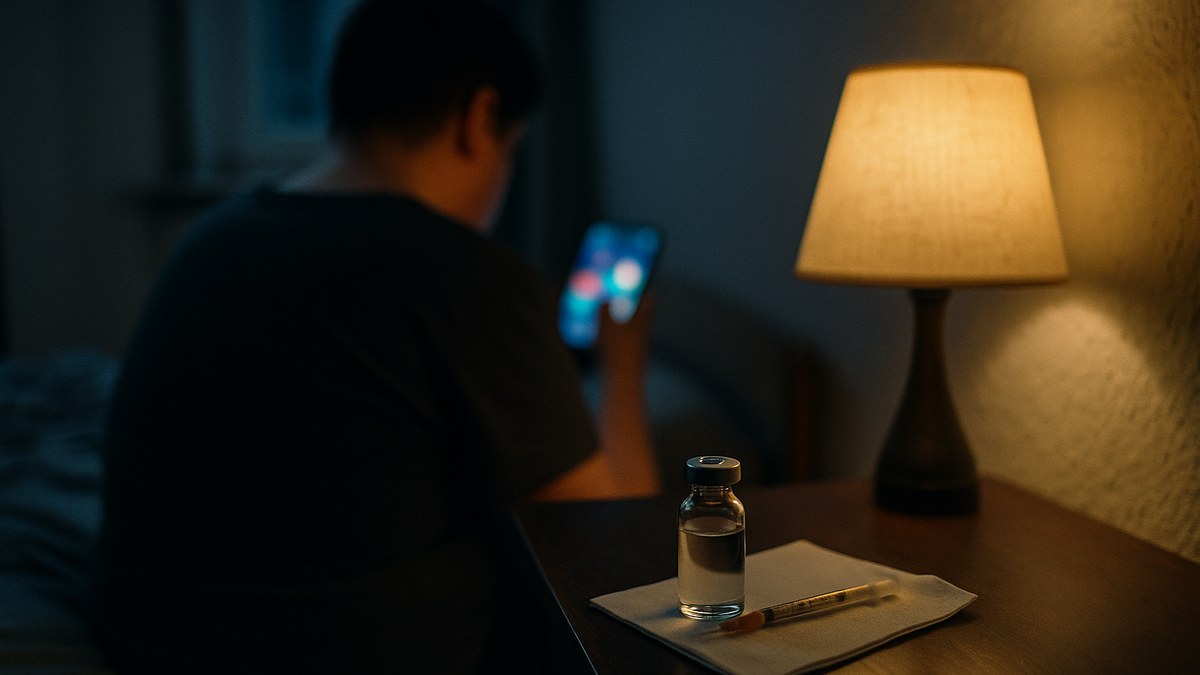
Are peptides safe? France just answered that question with case files rather than opinions: vomiting, dizziness, liver damage and hospital admissions among people who injected vials bought online. In July 2026, the French medicines agency (ANSM) published a formal alert, banned two sellers and named the products involved. It is one of the first times a European regulator has built a specific enforcement case against the social-media peptide market. Here is what the file contains, why it matters far beyond France, and how to protect yourself.
What exactly happened in France?
On 2 July 2026, the ANSM — France’s equivalent of the FDA — published an unambiguous warning: do not use the “peptides” sold online, they can be dangerous. The agency updated it on 22 July after sanctioning two sellers. The alert, available on the ANSM website, names the market’s best-sellers: retatrutide, BPC-157, TB-500, GHK-Cu, NAD+ and growth hormone products.
The trigger was pharmacovigilance data. According to AFP reporting in mid-August, about ten adverse-event reports were logged, several requiring hospitalization, in people aged 15 to 35. Teenagers are among the cases. That detail matters: they are exactly the audience of the “body transformation” content that fuels this market on TikTok and Instagram.
Are peptides safe according to the case reports?
The French reports describe two levels of harm, and neither supports the “harmless supplement” narrative. The frequent effects are nausea, vomiting, diarrhea, abdominal pain, appetite loss, dehydration, intense fatigue, dizziness and fainting. The severe cases — the ones that ended in hospital — involve liver damage, injection-site infections and serious allergic reactions. The table below sums up the file.
| Item | What the file says |
|---|---|
| Official alert | Published by the ANSM on 2 July 2026, updated 22 July |
| Products named | Retatrutide, BPC-157, TB-500, GHK-Cu, NAD+, growth hormone |
| Frequent effects | Nausea, vomiting, diarrhea, abdominal pain, dizziness, fatigue |
| Severe cases | Liver damage, infections, severe allergies — with hospitalizations |
| Case profile | About ten reports, people aged 15 to 35 (AFP) |
| Enforcement | Two websites banned from selling and advertising in July 2026 |
One caveat cuts in the wrong direction for buyers. These numbers only capture the visible part of the problem. Pharmacovigilance relies on voluntary reporting, and people who inject illegal products tend to seek care late and report rarely. The real incident count is therefore higher than the official one, not lower.
Why is there no quality control on these vials?
Because legally, they are not medicines. The vials carry the label “research use only” — not intended for humans. No health authority has assessed their composition, dose accuracy or sterility. This is not a French quirk: the FDA has issued its own warnings about unapproved GLP-1 products sold outside the pharmacy chain.
In practice, the buyer receives a powder. They must reconstitute it with bacteriostatic water, calculate the concentration, then inject the mix with an insulin syringe. Every step adds risk: dilution errors, contamination, poor injection technique. The infections in the French reports are not bad luck. They are the predictable result of replacing a pharmaceutical supply chain with a video tutorial. We unpacked that mechanism in our 10 answers on weight loss peptides.
How social media powers the market
The market lives where its audience lives: TikTok, Instagram, Reddit, Telegram and Discord. Influencers frame the vials as a shortcut to fat loss or muscle gain. According to press investigations, vials sell for 30 to 150 euros each, from websites based notably in Switzerland, Hungary and the Netherlands — conveniently out of easy legal reach.
The favourite sales pitch is retatrutide, marketed as “tomorrow’s molecule, available today”. The reality: retatrutide is still in clinical trials and is not approved anywhere in the world, for any use. Our retatrutide vs tirzepatide comparison covers where it actually stands. As for BPC-157, sold for “recovery”, it sits among the non-approved substances covered by the WADA prohibited list — USADA explains why.
What did regulators actually do?
France moved from words to enforcement. Two health-police decisions came down in July 2026: one against Synedica Laboratories on 9 July, another against Azentra (AZRL LTD) on 16 July. Both ban the sale and advertising of the products concerned, and the agency says further proceedings are under way. The public is invited to report suspicious websites and any adverse effect through official channels.
The wider context is well documented. The EMA has tracked falsified medicines for years, and weight-loss treatments have become their favourite target. The scams aimed directly at Mounjaro, which we described in our guide to buying online and counterfeits, belong to the same economy: high demand, an expensive product, and buyers willing to skip the prescription.
How do you protect yourself?
The rule is simple and admits no exception: a product labelled “research use only” must never be injected. If your goal is weight loss, the safe route exists — diagnosis, prescription, medical follow-up. It is often cheaper than grey-market sellers claim, too. Our Mounjaro price simulator, coverage included, lets you compare the real cost of supervised treatment with anonymous vials. The side effects of legitimate GLP-1 medicines are serious enough on their own — the NHS page on tirzepatide lists them — but at least they come with monitoring, batch control and a pharmacist you can call.
And if symptoms are already there — persistent vomiting, abdominal pain, jaundice, fever after an injection — stop the product immediately and see a doctor, telling them exactly what was injected. Doctors need the information, not a confession.
FAQ
Are peptides safe if the seller provides a certificate of analysis?
No. A certificate issued by the party that profits from the sale is a marketing document, not quality control. The French case reports include liver damage and infections in buyers of exactly such “certified” products. Only regulator-supervised manufacturing, with independent batch testing, provides real guarantees.
Is buying retatrutide online the same as joining a trial?
Not remotely. In a clinical trial, the product is authentic, precisely dosed and administered under medical monitoring, with an ethics committee overseeing safety. An online vial offers none of that: unknown content, unknown dose, no supervision, no recourse. Official trial registries are the only legitimate access route.
What has actually happened to people using these products?
France’s pharmacovigilance system logged about ten cases: nausea, vomiting, dizziness, dehydration and fatigue among the frequent effects, plus hospitalizations for liver damage, injection-site infections and severe allergic reactions. Those affected were 15 to 35 years old, according to AFP reporting.
What should I do if I already used one of these vials?
Stop injecting immediately, keep the vial and its packaging, and see a doctor with a precise description of what you used. Report the adverse effect to your national health authority. Seek emergency care for acute symptoms such as intense abdominal pain, jaundice or fever.
The bottom line
France’s alert moves the peptide debate from opinion to evidence. The question “are peptides safe” now has documented answers: hospital admissions, banned sellers, products that were never evaluated for human use. Against a market built to escape accountability, your best protection is supervised treatment and solid personal data. The MounjaGO app helps with exactly that: it logs weight, injections, side effects and meals, then generates a PDF report for your doctor — a $12 lifetime purchase, no subscription. Between an anonymous vial ordered on Telegram and a documented medical follow-up, the safety gap has never been easier to see.
This article is for information only and does not replace medical advice. Discuss any weight-loss plan or injectable product with a healthcare professional.